COMMENT: Two faces of fear —Dr Mohammad Taqi
Daily Times
Tuesday May 11, 2010
We would not apologise for Faisal Shahzad’s actions — for we have stood against his ilk throughout our adult life, while Lieberman’s kind has financed, armed and trained the antecedents of such bigots
Senator Joseph Lieberman’s
call to violate section 349 (a) (7), of the US Immigration and Nationality Act, smacks of a desire to go back to the days of the Executive Order number 9066.
The said order was used by Franklin Roosevelt during the Second World War for internment of the Americans of “Foreign Enemy Ancestry” (AFEAs), predominantly the ethnic Japanese, as many as 122,000 of whom were then held in various government-run camps. Following in the footsteps of Abraham Lincoln during the Civil War, FDR had also suspended the habeas corpus writ.
Title 8, Chapter 12, Sub-chapter III, Part III, Section 1481 of the US Code deals with the potential loss of US nationality by a native-born or naturalised citizen, the voluntary actions leading to such loss and the burden of proof to sustain the charges and the presumptions therein.
Simply put, Section 349(a)(7) states that a person can be stripped of his or her US citizenship for committing any act of treason against, or attempting by force to overthrow, or bearing arms against, the US, or conspiring to conduct any of these actions.
However, there is a glitch here — a constitutional one — that does not suit the expedient agenda of the hate-mongers like Lieberman. The law states that the offender can only be stripped of citizenship “if and when he is convicted thereof by a court martial or by a court of competent jurisdiction”.
And why do Senators Lieberman and McCain despise this hurdle? The answer lies in Section 349 (b), which states: “Whenever the loss of United States nationality is put in issue in any action or proceeding commenced on or after September 26, 1961 under, or by virtue of, the provisions of this chapter or any other Act, the burden shall be upon the person or party claiming that such loss occurred, to establish such claim by a preponderance of the evidence.”
Lieberman’s Bill is completely in sync with the neo-con methodology of prosecuting the war against terror, specifically in the Pak-Afghan theatre, in the ‘wham, bam, thank you ma’am’ manner. They wanted to do it cheaply and got thugs like Ismail Khan and Rashid Dostum to do the donkeywork so the neo-cons could divert the resources to attacking a sovereign Iraq. On the Pakistani side, the action was outsourced to a military dictator and his army.
The lazy and incompetent US planners in the Bush era –the motley bunch around Holbrooke not being far behind — never wanted to confront the complete monopoly of Saudi Wahabiism over the mosque-centres in the US. The previous US administrations had turned a blind eye to this Wahabist coup because of their unholy alliance with the Wahabi world against the Soviets.
Whereas no accurate data is available on the ethno-national background of American Muslims, the majority is of Indo-Pakistani-Bangladeshi descent. No concerted effort — by these communities or the US planners — has ever been made to free them from the chokehold of the minority Arab-Wahabi lobby.
While pretending to be non-denominational, most Muslim groups in the US including — but not limited to — the Islamic Society of North America (ISNA), Islamic Circle of North America (ICNA), Council on American-Islamic Relations (CAIR), Muslim Students Association (MSA), Muslim Public Affairs Council (MPAC) and so on, serve as a front for the Wahabi-Salafi ideology of hate. Their alleged financing by Saudi Arabia and the Gulf Arab states has been a subject of much writing but no official probe.
They systematically exclude people subscribing to the moderate Sufi, Shiite, openly Hanafi/Barelvi or other variants of Islam from holding key positions within these outfits. So strong is the Wahabi control that in most mosques run by these groups, the customary Friday prayer sermon is delivered only by Arabs. By one account, ISNA alone controls about 2,000 mosques in the US. This is a whole lot of intolerant pulpits at the disposal of Wahabiist ideology to indoctrinate the vulnerable South Asian Muslim-Americans.
A vicious web of bigotry and intolerance has been allowed to flourish and prosper in the US because the American decision-makers did not want to alienate their Saudi friends, who are the actual lords and masters of Wahabiism Inc. While this multitude of Islamic groups serve as the eyes, ears and sword-arm of Wahabiism Inc in the US, the nerve-centre and training grounds remain in Saudi Arabia and Pakistan respectively.
After any terrorist attack, like the recent one in Times Square, the websites of these outfits are swiftly populated with boiler-plate statements condemning the dastardly act and pledging solidarity with the “adopted homeland”. But in private and many public conversations, their (largely Arab) leadership cannot hide their designated apologist status for Wahabiist terrorism.
For three decades, the Liebermans and McCains of the world have collaborated with Wahabiist maniacs like Faisal Shahzad across the continents, while the majority of Pakistanis and Pakistani-Americans stood up against two military dictatorships and a whole slue of Islamic fundamentalist groups.
Along with the hundreds of thousands of progressive Pakistanis, I hold my head high for confronting Islamism from the very beginning. We would not apologise for Faisal Shahzad’s actions — for we have stood against his ilk throughout our adult life, while Lieberman’s kind has financed, armed and trained the antecedents of such bigots. I would not be labelled an AFEA.
It is important to not let Joe Lieberman or Faisal Shahzad define who the Pakistani-Americans are. Yes, we denounce the past, present or future acts of terror but more than that, we demand and want to be part of a process that takes a proactive approach to this problem.
Senator Lieberman and his coterie must realise that even to create a cultural détente, let alone a rapprochement between the US and the Muslim world, we need to wrestle back the control of the mosque-centres from the Wahabi-Salafi enterprise headquartered in Riyadh. This nerve-centre of fear should not be protected any longer.
The secular and progressive American-Pakistani individuals and organisations are up to the challenge and might indeed be the only viable vehicle to change the face of American Islam.
Attempts at a witch-hunt against common Pakistani-Americans through convoluted legislation, suspension of civil liberties and blatant violations of due process, however, would only go to show the other face of fear.
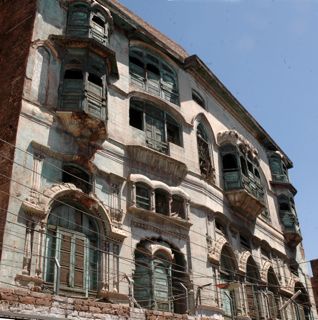
Qissa Khwani قصہ خوانی : In Persian Qissa Khwani means story-telling. Legend has it that the story-tellers used to gather in the ancient Qissa Khwani bazar of Peshawar. The tales here focus on that region but may not be as romantic as those of yore.
Monday, May 10, 2010

Thursday, May 6, 2010
Students Movement in Pakistan
Students Movement in Pakistan
By Dr S.Akhtar Ehtisham and Dr .M. Taqi
Pakistan Link, California
http://pakistanlink.org/Opinion/2010/May10/07/05.HTM
May 7,2010
At the end of 1948 a few progressive students founded a small group in Lahore called Democratic Students Federation (DSF). DSF participated in Union elections in different colleges. Prominent among its leaders were Abid Manto in Rawalpindi and Zuhair Naqvi in Lahore . In Karachi DSF was formed first in the Dow Medical College in 1950. Islami Jamiat e Talaba, the student wing of Jamaat e Islami formed in 1948, confined itself to proselytization and convened small gatherings in mosques.
Struggle of Bengali Students
Students in undivided Bengal were, if any thing, even more militant in the struggle for freedom than their counter parts in the rest of the country. Jinnah had declared Urdu the only official language of Pakistan. They could not accept that.
Dhaka University students led the language campaign. On February 22,1952 police opened fire on a group of Dhaka Medical College students. Twenty-five students were killed and many more injured. Such a storm of protest, indignation and condemnation followed that the government surrendered and accepted the legitimate demand of Bengali as a state language
Students’ Movement in Pukhtunkhwa
The politicization of the younger generation of Pashtuns started simultaneously with the anti-imperial struggle of Badshah Khan’s Khudai Khidmatgars. Pashtun Zalmay or Young Pashtuns was the organization’s youth wing which focused on the traditional countryside base of the movement.
Led by Wali Khan, under the aegis of the National Awami Party (NAP), the Pashtun youth movement came to the university campuses. Progressive leaders like Lateef Afridi, Afrasiab Khattak, the late Sarfaraz Mehmood and Mukhtar Baacha et al. came of age during the anti-Ayub protests. This era also saw the ushering-in of the Pashtun nationalist politics into the university campuses.
By early 1970s, the Pashtun Students Federation (PkSF) had a formidable presence in the Peshawar University. One of best-known students’ student leaders, Afrasiab Khattak of PkSF went on to lead the leftist movement in Pukhtunkhwa. He was implicated in the notorious Malakand and Hyderabad conspiracy cases. Lateef Afridi incidentally appeared as the defense lawyer in the Malakand case.
Upon the imposition of Zia ul Haq’s martial law, Afrasiab Khattak was arrested and spent a year in prison. He is said to have been subjected to water-boarding at the Warsak Dam. It soon became clear that the leftists were to be physically eliminated. Afrasiab went into self-exile in Kabul and t returned in 1989. He is now a member of the Pakistan Senate and the most important leader of the ANP.
Lateef Afridi had joined Bizenjo Sahib’s PNP, after the NAP was banned. He later on joined Wali Khan’s ANP and continues to be its key leader.
Pukhtoon Students Federation, under its then chairman Muhamamd Idrees, revolted against the high-handedness of the ANP leader Begum Nasim Wali Khan circa 1989-90.
The current information minister of Pukhtunkhwa, Mian Iftikhar Hussain was the chairman of PkSF during the MRD days while another ANP MPA, Dr. Haider Ali Khan, was the president of the PkSF wing in Khyber Medical College .
During the MRD days, Shaheed Nazeer Abbasi offered the idea of reviving the Democratic Students Federation. He, however, was tortured and killed by the military regime. Kifayat Ali became the president of the DSF, which remained affiliated with the leftist group within the ANP. Kifayat was a charismatic, well-read and well-traveled man and helped the DSF to have a dynamic presence on the campuses. His brilliant leadership was reflected also in his handling of the recent lawyers’ movement.
The People Students Federation (PSF) in Pukhtunkhwa played a robust role against Zia’s regime and produced some of the finest student leaders. The late Syed Qamar Abbas, who was the son of Farikh Bokhari of the Progressive Writers Movement, was the driving force behind the PSF activities in Peshawar and surrounding districts. He was arrested and tortured at the orders of the military governor, Gen. Fazle Haq. Qamar along with his associates Azam Afridi, Syed Ayub Shah and Dr. Adnan Gul made life miserable for the junta. Qamar, Azam and Ayub were later elected to the provincial assembly from Peshawar region. Qamar Abbas was later killed in an election-related vendetta in Peshawar.
One would be remiss not to mention the late Hayat Muhammad Khan Sherpao, a founding leader of the Pakistan Peoples Party. He, too, was among those who cut their political teeth during the anti-Ayub agitation. It was most unfortunate that he was martyred by a bombing inside the Peshawar University .
Overview of Students Movement
Following partition Hindu and Sikh students who had dominated educational institutions in West Pakistan left behind a vacuum, which was filled by the immigrants.
Muslim Students Federation was formed at the NED Engineering College, Karachi in 1947. Ahmad Khan Barakzai was the first President.
Student movement in the western wing in early years was for all practical purposes, dominated by the progressive cadre of Karachi. They launched a movement for better educational facilities such as decent classrooms, libraries, laboratories and reduction in fees and provision of textbooks free or at subsidized rates and above all the right to organize.
Overall lead for the national students movement was given by DSF leaders in Karachi. The core of the leadership came from Dow Medical College, Karachi which produced such leaders as Sarwar, Haroon and and Hashmi. Sarwar was the first president of DSF. Its headquarter was in Rahman Hashmi's Room 29, Mitha Ram Hostel.
By late 1952, students took out processions, and led marches in Karachi on January 6, 7, 8/1953. National and international press gave them sympathetic coverage. Prime Minister Nazimuddin met the leaders on January 7, 1953 and accepted their demands. In the official press release, however, agreement was denied.
Enraged, students went on a rampage and finding a car with an official flag on it parked in Saddar, a posh commercial area, surrounded it. Its occupant turned out to be none other than the police minister Mushtaq Gurmani. The police panicked and attacked the students with tear gas. The minister succumbed to gas fumes and had to be carried away.
Police retaliated by opening fire on a group of students in front of the Paradise Cinema in Saddar. Twenty-six students were killed. Nainsuk Lal, a boy scout helping an injured striker, was the first fatal casualty. Several flags got soaked in blood. The city was paralyzed and life came to a halt.
Kazim, the overall leader of the movement, generously and in national spirit, announced that the Government had accepted their demands. GOP, instead of responding gratefully to Kazim’s gesture and considering student demand sympathetically, banned DSF and put student leaders in jail.
Student leaders from East and West Pakistan got together and gave a call for All Pakistan Students Convention in December 1953. Sarwar was elected the Chairman of the convening committee. Delegates from colleges all over the country participated. Mateen and Khaliquzzaman came from East Pakistan. The Punjab delegation was led by Abid Manto, then of Rawalpindi . Alia Imam represented Indian students as an observer. The Sindh delegation was led by Syed Mazhar Jamil, now a leading literary critic, art historian and attorney of Karachi . Kamil Qadri, a leftist student leader, led the Quetta delegation.
Convention dates were fixed in January 1954. The venue was Katrak Hall in Saddar. Messages of solidarity came from student bodies all over the world. Law Minister AK Brohi agreed to be the Chief Guest. He arrived at the hall only to find the place in pandemonium. His cabinet colleague Gurmani had orchestrated the disruption of the convention. The City administration had sent gangsters to subvert the proceedings. Police followed to “quell” the disorder. Both beat up the students.
Student leaders had taken the precaution of organizing a defense squad led by Adeeb Rizvi, later to distinguish himself for his work in kas idney diseases and founder of the Sindh Institute of Urology and Transplant (SIUT). Sher Afzal Malik was a sort of “Red Guard” Lieutenant Commander of the security detail. Volunteers somehow managed to control the situation for long enough to enable Brohi to conclude his address, but the rest of the proceedings had to be moved to another site.
The convention passed a resolution to form All Pakistan Students Organization (APSO), elected Sarwar as the General Secretary General. Numerous student organizations in small and large towns of all the provinces of West Pakistan decided to merge in it. Bengali delegates pledged that they would seek the approval of their groups to do the same. .
Reacting to police and gangster brutality enraged students spread all over the city. Police dare not take overt action and so bloodshed was avoided. But many students were arrested and spent months in jail. Pakistan joined Western security organizations in 1954 and by a queer coincidence (or design) APSO was also banned about the same time.
National Students Federation (NSF) had been a parallel moderate-right wing student body. Second-generation student leaders Wadood, Sibghat and others negotiated with NSF. A coalition was worked out.
Fatehyab Ali Khan, student leader of the period, joined the Mazdoor Kisan Party and rose to be its president. Another student leader was Mairaj Muhammad Khan. ZA Bhutto befriended and appointed him to his cabinet. Mairaj maintained his links with trade unions and once Bhutto had crushed the unions, he sacked Mairaj and put him in jail.
Among other pioneers were Shafi, a brilliant debater, Barkaat, a party ideologue par excellence and Saghir. Undoubtedly all these talented young men had had to play a second fiddle to and resented Sher Afzal, who was molded by Hasan Nasir, the luminary of the Communist Party of Pakistan (CPP). He had great organizational skills and had a devoted circle of admirers from all linguistic groups.
He was elected president of Dow Medical Students Union in 1956. The union made some radical demands. The administration would not agree. A dozen or so activists, Sher Afzal among them and including a few girls, went on hunger strike. It gathered sufficient public support to make H.S. Suharwardy, the PM at the time, to visit the college and accept all students’ demands and give Sher Afzal a drink to break his fast. Tass and other international agencies flashed the news.
Sher Afzal had a say in the upper counsels of left wing political parties led by Bhashani and Wali Khan and was welcomed by the likes of Suharawardy in their private homes. He also earned the barely concealed hostility of the entrenched leaders of the left in Karachi. After completing his tenure of office in the students union, he became the president of NSF.
Martial Law of 1958 intervened. Sher Afzal was soon to lose his patron Hasan Nasir to an extra-judicial murder in the Lahore Fort. Knives were soon out against him.
Martial Law had proscribed student’s unions and college elections. After a hiatus of two years, our military administrator, a doctor Naqi, Lt Colonel in rank, allowed elections in 1959. Our candidates won.
As the next election time approached caucuses were held to choose candidates. Hasan Rizvi was selected to contest for Presidentship and I was nominated to be his running mate as General Secretary. Rizvi won, I lost to a friend. The electoral loss was a serious setback for Sher Afzal.
Sher Afzal looking for an opportunity to retrieve lost ground, pinned his hopes on Patrice Lumumba, a firebrand left leaning nationalist PM of Belgian Congo, who had been assassinated by imperialist agents.
The NSF gave a call for a day of protest marches and meetings. We were a forlorn group of about a hundred carrying such banners as “Long Live Lumumba,” “Death to UN Secretary General Dag Hammarskjöld” and “Down with Imperialism”, and shouting similar slogans.
About the time communal riots had broken out in Jabalpur, India . There were persistent demands that we organize a protest march on the issue. The bosses sent agents provocateurs, who taunted and ridiculed Sher Afzal, and called him a lackey of the Soviet Union.
The next day the daily Dawn editorialized that our progressives felt more for the cannibals of Africa than for their brethren in faith in India. Left with no choice Sher Afzal characteristically threw himself into planning a big gathering and a march to follow.
On the appointed day students in their thousands gathered near Pakistan Chowk. Speeches were made pledging support to Indian Muslims. Police had taken up positions in the broad avenue flanking the meeting. The district magistrate (DM) announced that we had made an impressive protest, the authorities would take note and do all they could to protect our co-religionist in India . We should now disperse peacefully.
Sher Afzal agreed and gave a call to disperse. But an agent provocateur snatched the microphone and screamed that our mothers and sisters were being raped in India and we were being asked to disperse peacefully. It was obviously a signal. Flags and banners hoisted on long bamboo polls were grabbed and scores rushed at the police. They responded with tear gas and lathi (baton) charge.
About midnight there was a loud knock at my door. I opened it and found a Criminal Investigation Department (CID) Sub-Inspector Shah with another two policemen wearing plain clothes. Shahji told me that DM had invited students to a meeting. I told him not to be ridiculous, and to tell me plainly that I was being arrested.
We were about fifteen detainees in a 10x10 cell. Together, our spirits were high. We sang, joked and were quite noisy. Soon after a Police Superintendent (SP) visited our cell and started hurling abuses at us. He told Sher Afzal that being a Punjabi himself and a former student of his father who was a reputed head master, he felt like a brother to him. He did not expect his brother in spirit to associate with riff raffs. Mairaj and Fatehyab protested. They were taken out and slapped right in front of us. They were again taken out of the cell early in the morning and mercilessly beaten.
About one hundred and sixty students were eventually transferred to Karachi central jail, and arrived around noon. The Jail Superintendent informed us that per jail regulations a prisoner arriving about midday doesn’t get lunch or the evening meal, so we would get breakfast the next day. We groaned audibly. The superintendent glared at us. An elderly man, who had joined us, told the superintendent not to be a damned fool. We were students, not ordinary criminals. The superintendent appeared to shrink in his uniform at the rude and public reprimand. The white haired “angel”ordered a guard to go out and get lunch, cold drinks and cigarettes for us.
From the next day food drinks and cigarettes started arriving for us . About thirty of us were herded in separate barracks, the other one hundred and thirty having been released after a few days of incarceration. We spent the time singing, telling stories, teasing each other and in political indoctrination. Many poems were written, some too rich and off color to narrate.
Eid fell during our incarceration. The day started with prayers. The jail Imam (prayer leader) had been commanded to lead the official congregation in the City as Maulana Ehtishamul Haq Thanvi, the official Moulvi, had had a dispute with the government and boycotted the main congregation. We were left with the Deputy Jail Imam. He was a “lifer convicted for murder and sentenced to a twenty-one year jail sentence. The man could not pronounce Urdu words properly much less Arabic. We could not help giggling during the prayers. During the “Dua” after the prayers we lost all sense of sanctity of the occasion and implored “God” to mete out severe punishment to our fellow prisoners.
After the prayers we proceeded to other barracks and were entertained with sweets and drinks, some spiked with Bhang (Marijuana) and raw and refined opium. One person, in for murdering his paramour in a fit of jealous rage, sticks to memory. He had a haunting voice and accompanied himself with music produced by tapping an empty earthenware pot (ghara). We also met a group of ex-Air Force officers convicted of some sort of smuggling. They, instead of idling away the hours, had started a “crime school” teaching tricks of the trade to fellow inmates. We also met an accountant, formerly a senior official in the State Bank. He had been convicted of currency fraud and had, according to his own account, stashed away millions in foreign bank accounts.
On my first day back in college I was expecting a hero’s welcome that took me by a pleasant surprise. Even my political opponents gave me admiring looks.
Karachi party bosses had, in the meanwhile, made inroads into the NSF. They sent messages to Sher Afzal that he should retire from student politics.
A meeting was held in Dow Medical College in which extravagant praise was heaped on Sher Afzal. He was humbly requested to retire. The inner party struggle continued for quite long. Sher Afzal finally decided to cut loose his ties to Karachi and returned to Peshawar where he joined the Awami National Party.
With his Punjabi/Pathan credentials, work among Karachi students, abounding enthusiasm, good mind, inexhaustible energy and patent ideological integrity, he should have gone far. He should have been catapulted into national politics, but Martial Law allowed only sycophants to rise. It was a great national loss.
This account is based on interviews with stalwarts of student’s movement of Pakistan Messrs Nooruddin Sarki, S Mazhar Jamil and Fatehyab Ali Khan advocates and Drs Muhammad Sarwar, Syed Haroon Ahmad, Muhammad Khurshid and Rasheed Hasan Khan of Karachi and Dr Hasan Raza Rizvi and Barrister Abid Hasan Manto of Lahore. The list is by no means complete.
Wednesday, May 5, 2010
The Scylla of violence - on Baluch resistance
The Scylla of violence
http://thenews.com.pk/daily_detail.asp?id=237757
The News
Thursday, May 06, 2010
Dr Mohammad Taqi
"This is a political war and it calls for discrimination in killing." -- John Paul Vann, US adviser in Vietnam
The recent killing of Professor Nazima Talib in Quetta has once again called into question the logic of indiscriminate violence against the non-combatant, non-Baloch settlers in the province. It has turned the focus of attention not only to the Baloch guerrilla fighters but has simultaneously put those, who support a non-violent Baloch struggle, on the spot.
Writing about the potential US policy towards Balochistan, Selig S. Harrison noted in his 1981 book 'In Afghanistan's Shadow' that, "with respect to the Baloch issue, the American goal should be to forestall the necessity for a choice between the Scylla of supporting repressive counterinsurgency programs and the Charybdis of supporting Baloch independence."
Indeed both the friends and foes of the Baloch have had to follow this impossible-to-negotiate path. The state players like the USA, former Soviet Union and India have erred - by design or default - in favour of the Pakistani state, while treading this regional policy tightrope.
For the individual and politically or apolitically organised supporters, sympathisers and fellow-travellers of the Baloch struggle, it has been a rather straightforward matter where they have consistently condemned the repressive tactics of the Pakistani state machinery while openly endorsing the Baloch cause. Be it the joining of the 'London Group' boys with the Parari (fighters) in Marri hills in the1970s or lending open - albeit tepid - political support from Wali Khan to Asif Zardari, the Baloch struggle has had almost unanimous backing from the leftist and the centre-left circles of Pakistan.
With the rising spate of killings of the non-combatants, especially Punjabis, in Balochistan, the non-Baloch sympathisers of the Baloch nationalists are finding themselves in an increasingly difficult situation in defending what they have held to be a legitimate resistance and indeed a just war.
The nature of the Baloch guerrilla struggle has been complex throughout its many phases. For the most part though, it has followed - as accurately noted by Selig Harrison - the line given by Che Guevara's associate Régis Debray: in the revolutionary struggle the fighters themselves should be the focus of political power and not subservient to the political leadership not involved in fighting.
Sardar Ataullah Mengal and to some extent Nawab Khair Bukhsh Marri had correctly observed during the 1970s that the students and non-students joining the ranks of the armed struggle would not be under their political guidance or control. These leaders, due to both personal and ideological discipline, did not encourage ideological waywardness in the Baloch guerrillas.
On the other hand, the late Nawab Akbar Khan Bugti, for various reasons, contributed to strengthening of this behaviour in the movement. Nawab Bugti was a rather late convert to the Baloch nationalist cause. Besides having a death wish characteristic of a convert, he injected traits in the struggle that have over the last several years contributed to its negative image.
Irregular and asymmetric wars - like any other armed conflict - exhibit tremendous variation in the magnitude and type of violence, even within different phases and time-periods of that particular conflict. The motives of such violence, especially against civilians are complex and multiple. They could range from drawing attention through a spectacular act like the WTC bombings to instilling fear and triggering displacement, as in the case of the Jewish Irgun's attack on Deir Yassin in Palestine.
Regardless of the targets and tactics of violence, it is neither indiscriminate as such nor without consequence. Usually, a method exists to such madness, whether it is a so-called reprisal based on a presumed guilt by association of the target or simply an attempt to plunder and eliminate a group.
More importantly, there are limits to any strategic gains through such violence. Beyond a certain point, violence - indiscriminate or not - is counterproductive. The general population, angered and frightened by the violence, is not only likely to support the state's repressive response but might also resort to tit-for-tat hostilities as have been witnessed in the case of the Baloch students in Punjab.
The Baloch nationalist movement now has reached a juncture where it may lose the support of its various sympathisers in the rest of the country. Similarly, the state apparatus is also at the threshold where it would likely respond by high-profile deterrent activity against the resistance.
The state forces already outnumber and out-gun the Baloch nationalists and have no intention to scale back their repressive activity. Given the geopolitical realities surrounding Balochistan, it is highly unlikely that the Baloch guerrillas will parade down the city streets, mobilise a mass following or engage the state forces in open combat.
With the US, Pakistan and India arriving at a tacit understanding on the future direction of events in Afghanistan, the Baloch question is nowhere near the top of any regional or global power's to-do list.
It is high time that the Baloch fighters and non-combatant elders and leaders revisited the tactics, direction and objectives of their campaign. The traditional Baloch leadership should be brought back into the picture. The Baloch resistance is at a point where, without political leadership, the Scylla of its own violence is about to push it into the arms of the Charybdis of failure.
Sunday, May 2, 2010
Misfortunes of the Left
http://www.dailytimes.com.pk/print.asp?page=2010\05\03\story_3-5-2010_pg3_5
Misfortunes of the Left: Nausée, Ennui and Déluge
By Dr. Mohammad Taqi
March 3, 2010
“ With the development of interest-bearing capital and the credit system, all capital seems to double itself, and sometimes treble itself, by the various modes in which the same capital, or perhaps even the same claim on a debt, appears in different forms in different hands. The greater portion of this "money-capital" is purely fictitious.”
- Das Kapital: Volume 3, Chapter 2 ‘Component Parts of Bank Capital’
My first response to the Daily Times (DT) editorial, “Left Fortunes” dated April 26,2010 was, in the words of Ghalib:
Torr baithay jabkeh hum jaam o suboo, phir hum ko kia
AsmaaN se baada-e-gulfaam go barsa karay
It roughly translates into an unattributed ancient Greek verse:
When I die, let earth and fire mix
It matters not to me, for my affairs will be unaffected
The next day I saw Senator Carl Levin of Michigan on television, ripping apart the top executives of the Goldman Sachs for their continued swindling of our assets. I thought then, that the DT’s call to whip the Pakistani Left - or its leftovers- into shaping up, merits some introspection.
Most important aspect in the editorial was the quote from Karl Marx (Capital Volume 1) which -had it been produced in full - would have answered the editor’s question. Marx said:
"In every stockjobbing swindle everyone knows that some time or other the crash must come, but every one hopes that it may fall on the head of his neighbour, after he himself has caught the shower of gold and placed it in safety. Après moi le déluge! is the watchword of every capitalist and of every capitalist nation. Hence Capital is reckless of the health or length of life of the laborer, unless under compulsion from society."
Having lived in Michigan for ten years as Carl Levin’s constituent, I can safely say that he is no revolutionary. He was acting under a compulsion from the society – a compulsion to take to task the swindlers of the Wall Street, even if for cosmetic reasons alone.
The Pakistani urban voters, who are Islamized enough to don a beard or hijab but smart enough to send their kids to private schools and put their faith in the laissez-faire religion, have not yet created a compulsion for the reckless neo-liberal market economy to mend its ways.
In fact the Pakistani Neocon media, led by the Hamid Mirs and Talat Hussains, have stoked this urban Pak-nationalist zealotry – whose detonator is Saudi Islam- and helped the grotesque fascist mediocrities like the Brothers Sharif, complete their choke-hold on Pakistan’s political economy.
One is tempted to say to Shahbaz Sharif, whose quote “where have those left-wing revolutionaries gone”, the DT had used to start building its case, that:
Muzhdah-i-baad ahle riya raa keh ze maidaaN raftam
(Translation: Greetings to the hypocrites like you, for you have vanquished me and the battlefield is now open to your ilk)
Isn’t this what they, their military patrons and the media Neocons wanted in the first place? Why the gimmickry and the periodic butchering of Habib Jalib’s poetry?
I do not intend to absolve the Left of the blame but it is not correct that the leftist movement in Pakistan died ten years before the fall of the USSR. The closest we came to an openly Marxist party contesting the elections was in 1990, when the Qaumi Inquilabi Party (QIP) of Afrasiab Khattak and Lateef Afridi went to the polls, in alliance with Benazir Bhutto’s PPP. As someone who had the QIP’s manifesto typeset, proofread and printed, I would say that insofar as the Pashtun Left goes, that perhaps was our swan song.
In the Pukhtunkhwa at least, the leftists were tightly allied to the Afghan Left, which outlived the Soviet Union by a year. But this is neither a consolation nor an excuse for our failure as a movement.
The causes of our failure are multiple and complex. Personal rivalries and internecine warfare, blind following of Peking or Moscow, lazy anti-capitalist sloganeering and above all the failure to analyze the class dynamics in the perspective of a multiethnic, tribal-feudal, national security state just about sum-up our shortcomings.
However, the fatal flaws of the Pakistani Left in general and the international leftists in particular are twofold: Firstly, a robust communication system to reach out to those, who need to hear us. Second is the failure, on economic front, to produce a viable alternative model in the post-Soviet era.
In Pakistan’s case, since the government takeover of Mian Iftikharuddin’s Progressive Papers Limited (Pakistan Times and Imroze), we have never been able to find or found a mass publication system. Mazhar Ali Khan’s ‘Viewpoint’, Hussain Naqi’s ‘Sajjan’, Baacha Khan’s ‘Shahbaz’ or even Hanif Ramay’s ‘Musawat’ were no match for the steady might of the State propaganda machinery.
Even today when the US publishing houses are opening shop in Pakistan through the Express Tribune and Newsweek, there is no alternative on the horizon. Marx, Engels and Lenin took pride in prolific writing, whether journalistic, books or pamphleteering. As we say in Medicine, if it hasn’t been documented, it hasn’t happened. The leftists certainly aren’t documenting well. At the very best we are indulging in parallel play and talking past each other.
Had we been communicating with each other, it was hard not to predict the stock market crash of September 2008. The Wall Street subsequently came up with terms like toxic assets and collateralized debt obligations (CDOs) to explain as to what went wrong.
The CDOs were nothing but imaginary money. What led to the US housing-market collapse is one phrase in the opening quote of this article – fictitious capital! Yes, Marx got it right.
If the market economies had to look all the way back to John Maynard Keynes, to find a fix for the recession, there is nothing wrong in revisiting the Marxist economics to look for an alternative, as the DT editorial suggests. It is about time we got over our nausea and ennui and set forth on what Sartre called the roads to freedom.
However, without a robust focus on the economy and mass communications, we won’t be able to invoke a compulsion from the society and might end up plunging into a bigger déluge than we are in.
PS: On a personal note, I want to tender an unconditional apology for any atrocity or abuse of human rights ever committed in the name of Marxist ideology. Fortunately, the Pakistani Left has never been a party to any such act.
(Author practices and teaches Medicine at the University of Florida and contributes to think-tanks www.politact.com & Aryana Institute. Email: mazdaki@me.com )
Tuesday, April 13, 2010
Media, medics and medical errors
COMMENT: Media, medics and medical errors
—Dr Mohammad Taqi
Daily Times
Tuesday, April 13, 2010
http://www.dailytimes.com.pk/default.asp?page=2010\04\13\story_13-4-2010_pg3_6
There is no doubt that the news media has the power to mould society’s perceptions of healthcare issues, including medical errors and negligence. But turning patients into public curiosity, misery into headlines and public shaming of the doctors to the point of coercion, cannot achieve this
“Mistakes live in the neighbourhood of truth and therefore delude us” — Rabindranath Tagore in Fireflies.
What transpired recently between the media-men and doctors at Lahore’s Jinnah Hospital is an ugly blemish that would require a robust and sustained societal action to be washed away. Two groups of professionals were literally at each others’ throats, shredding in the process their respective codes of ethics.
As I watched this brawl on a Pakistani television channel during my lunch hour, I happened to have a medical student with me. As the son of a working journalist, a freelance op-ed contributor and a practicing physician myself, I found myself torn and humiliated when my student asked what was going on. All I could mumble was that some of us like to play above the rules.
My mind then turned to the late CP Scott’s golden rule for newsgathering that “a newspaper’s primary office is the gathering of news. At the peril of its soul it must see that the supply is not tainted.”
Well, could the newsmen on the Jinnah Hospital beat then safely say that the information they gathered was not tainted? Not tainted by the breach of editorial code that any media outlet worth its salt should have in place?
CP Scott’s The Guardian clearly states in its editorial code regarding hospitals that: i) Journalists must identify themselves and obtain permission from a responsible executive before entering non-public areas of hospitals or similar institutions to pursue enquiries. ii) The restrictions on intruding into privacy are particularly relevant to enquiries about individuals in hospitals or similar institutions.
The Guardian’s code also cautions against use of clandestine devices and subterfuge, stating that:
i) The press must not seek to obtain or publish material acquired by using hidden cameras or clandestine listening devices; or by intercepting private or mobile telephone calls, messages or e-mails; or by the unauthorised removal of documents or photographs. ii) Engaging in misrepresentation or subterfuge, can generally be justified only in the public interest and then only when the material cannot be obtained by other means.
All readily available references on professional ethics in journalism emphasise the respect for privacy and human dignity as an integral part of the professional standards of a journalist.
From what has appeared in the media, it is difficult to say if any of the journalists involved would be able to vouch that their reporting in this case was not tainted. There is no doubt that the news media — especially the electronic media — has the power to mould society’s perceptions of healthcare issues, including medical errors and negligence. But turning patients into public curiosity, misery into headlines and public shaming of the doctors to the point of coercion, cannot achieve this.
When the late Aziz Siddiqui pioneered The Frontier Post from Peshawar, he made copies of ‘The Times Style Guide’ and made an ethics code available to the members of his team. A generation later, we have taken a step back to the Tehlka.com mode of sensationalism. We are about to let the mistakes living in the neighbourhood of the truth delude us.
The spat of violence against the doctors, booking them under section 302 of the Pakistan Penal Code, slapping anti-terrorism charges against them under the full glare of tele-media is not only putting the doctors in the ‘fight or flight’ mode but also keeping the media from focusing on what is called the ‘culture of safety’ in the modern practice of medicine.
The repetition ad nauseam — mostly by the media — of the Urdu/Arabic word maseeha for the doctors creates a halo of infallibility around them. We are not infallible and medical science is far from being perfect.
Doctors — like any other human being — make mistakes and the practice of medicine is fraught with potential for errors in the diagnostics, treatment, prevention, and communication or due simply to dealing with the unknown. Death or injury is not always the failure of medical science but many a time it is an inevitable outcome.
In 1999, the Institute of Medicine — the health arm of the US National Academy of Sciences — published its landmark report, To Err Is Human: Building a Safer Health System, about breaking the silence surrounding medical errors and their outcomes. From the outset, the report made four issues abundantly clear.
First and foremost was that the report itself and the healthcare system were a decade too late compared to any other high-risk industry to pay attention to ensuring basic safety. Secondly, it observed that nothing short of a national agenda involving national and state governments to be implemented within and outside the healthcare organisations, through the regulatory and incentive-based and public and private strategies, would make a significant dent in the problem which at the time was contributing to at least 44,000 deaths per year. Thirdly, it advocated setting quality benchmarks and standard of care metrics along with promoting trained leadership, creating research and assessment tools and setting up voluntary and mandatory systems of error reporting.
The most important conclusion of the report was that, in a majority of cases, medical errors are not the result of individual recklessness or incompetence. Most commonly, the errors result from systemic failures, faulty processes and an absence of safety nets. A key observation was that unless the culture of pointing fingers at individuals was abolished, it was difficult to promote the culture of safety.
Ten years on, many of the recommendations of the Institute of Medicine have been implemented across the healthcare systems in the US while others are being rolled out and improved upon.
While the media’s job is untainted newsgathering and balanced reporting, the doctors’ pledge is to first do no harm but also to honestly report and try to mitigate such harm in the event it happens.
However, the physicians’ community is lagging behind by decades in developing strategies even to recognise the magnitude of the crisis where unintended harm or negligence leads to adverse outcomes.
In Pakistan, the media and the doctors have an opportunity to turn this moment of adversity into opportunity to educate the people and the lawmakers about developing a culture of safety throughout the healthcare system. But if they decide to continue playing above the rules, history may harshly judge them as being part of the problem.
As for those of us outside Pakistan, we can pledge our professional, scientific and academic resources to help keep the mistakes lurking near truth from deluding all of us.
The writer teaches and practices medicine at the University of Florida and contributes to think-tanks www.politact.com and Aryana Institute. He can be reached at mazdaki@me.com
Saturday, March 27, 2010
Muslim League, Military and Media: making of the Pakistani Sangh Parivar
Muslim League , Military and Media: The Pakistani Sangh Parivar
By Dr. Mohammad Taqi
March 21,2010
http://pakistanlink.org/Opinion/2010/Apr10/02/02.HTM
“… the (class) struggle (in France ) created circumstances and relationships that made it possible for a grotesque mediocrity to play a hero's part."
(The Eighteenth Brumaire of Louis Napoleon)
As the diplomatic hardball between the USA and the Pakistani delegation- including Generals Kiyani and Pasha- wound up, there remains more at stake then just the ruthless endgame in Afghanistan .
It is a matter of time before the Pakistan Muslim League-Nawaz (PML-N) replaces the Pakistan Peoples Party (PPP) to form federal government in Pakistan .
Punditry is fraught with the risk of making a wrong prediction and geopolitical events almost never follow the common sense but the bigger risk is the above scenario coming true - either through snap or term polls.
The Pakistan Army ’s party-line regarding the future of Afghanistan - and its role therein - has been enunciated very clearly in Washington , D.C and before that in Brussels . The part that the Pakistani security establishment desires to play in Afghanistan is not possible without having a political realignment at home.
Even a beleaguered and politically fumbling President Zardari and a floundering Asfandyar Khan, at the head of the secular PPP and the Awami National Party (ANP), respectively, are considered major stumbling blocks in the fruition of the national security agenda unraveled by the Army Chief in February 2010.
Mian Nawaz Sharif ’s volte-face last week, on the constitutional reform package has been misread by many as a move at the judiciary’s behest. However, the PML-N leaders involved in this change of heart and its net negative outcome vis a vis powers to the provinces, point towards a stance in sync with the Army establishment. The prayer-beads wielding judiciary may indeed have served as the stick in this process.
In its present form, the PML-N is the Army’s natural political ally in its quest for the strategic depth in Afghanistan .
Having played its cards well during the lawyers’ movement, the PML-N has evolved from an urban chauvinist enterprise, to a neo-populist party with its core communalist identity intact. The net outcome of the lawyers’ movement was a grotesque mediocrity playing the hero’s part.
An Islamized, yet sufficiently pragmatic, urban Pakistani nationalist voter is the demographic that the PML-N caters to. In this, the party and the Pakistani Neocon media have found a confluence of interests, which is not entirely coincidental.
Like the PML-N, many in the electronic media, used the lawyers’ movement to distance themselves from their fundamentalist past and created a centrist illusion around them. Those who shot to prominence via exclusive interviews with the Al-Quaida leaders or deriding the secular-nationalist leaders through the state-owned Pakistan Television, re-marketed themselves, with great success, as the face of the modern and “liberated” Pakistani media. A good case study would be to track the careers of top three Urdu talk-show anchors, twenty years back.
However, it was only a matter of time before the centrist façade of the PML-N and its media allies came off, revealing an alliance of the extreme right-wing forces that has remained intact since the heyday of the Pakistani-Saudi-US anti-Soviet war in Afghanistan .
Whereas Shahbaz Sharif ’s fascist gaffe is still being written about in the English print-media, the Urdu television anchors killed the story in less than 48 hours. And they never did pick up on Justice Khawaja Sharif’s callous remarks. The very same coterie of the media anchors - taking cue from the GHQ- had ripped the PPP government apart over the Kerry-Lugar Law for weeks on end.
Neither were Mr. Sharif’s remarks off the cuff nor their suppression by the media incidental. He was speaking his mind and that of his voters. Slip of tongue, if any, was Freudian. Similarly, the elder Sharif – though overplaying his hand - is pandering to the Pak-nationalist voter base.
What we have at our hands is a Muslim League-military-media nexus trying to get all its ducks in a row before the final phase of the decade-long Afghan war .
In a world where there is zero tolerance for the old-fashioned jihadist Mullahs, the two former epicenters of the militant-Islamist combine Jamiat e Ulama e Islam (JUI) and the Jamat e Islami (JI) are being replaced by the PML-N as the new matriarch of the Pakistani Sangh Parivar (Family of Associations).
T he JUI and JI are not just unpalatable for the West but they are too outdated to be sold successfully to the Pakistani urban voters who are Islamized enough to don a beard or hijab but smart enough to send their kids to private schools and put their faith in the neo-liberal market economy.
The Hindu fundamentalist Sangh Parivar in India had replaced the out-dated Jana Sangh with the BJP in 1980 and made full use of the hate-mongering media houses to destroy the vestiges of the Nehruvian secular polity. A Congress party that was rotting from within, Rajiv Gandhi and his incompetent and corrupt secular government expedited the process.
While Sangh Parivar– led by the BJP in electoral politics – started as a formal alliance of the Hindu revivalist groups, the Pakistani version is an informal alignment of various political groups with the media – especially electronic - developed with the blessing of the security establishment.
PML-N’s connections with the Sipah e Sahaba and the Taliban are both by design and default. It now is the hub of the concentric circles of jihadist outfits of various shades and is their sheet anchor in the parliamentary politics.
We are dealing with a mass phenomenon – akin to the Hindutva of the BJP and pretty close to the European fascism - which creates a vivid enemy image by amalgamating elements from past ethnic, national, religious and social prejudices and the real or perceived current crises. This amorphous yet highly tangible image of an anti-Pakistan and anti-Islam West and the USA , is then projected through the modern media techniques with slick anchors leading the charge.
The enemy image is tangible enough for most to blame the USA within minutes of a suicide bombing in Pakistan . However, it is too amorphous for anyone to really know what to do with it. The opinionated talk-show hosts keep it abstract so that the common man keeps falling back on the crutches of Pak-nationalism, Islam and anti-West sloganeering of the PML-N, which appear like the panacea to evils.
The BJP – like the PML-N now – had used religion as a detonator in its hate-filled Molotov cocktail of religion, nationalism and communalism and then the media to lob this bomb into the Indian living rooms. BJP’s fundamentalism always took a backseat to its communalist-nationalism. The PML-N and jihadist punks of the “wake up Pakistan ” campaign a la ARY television use enough religion to keep the pot simmering but make it subservient to the Pak-nationalism of the GHQ variety.
Interestingly, the RSS antecedents of the BJP didn’t wear Khaddar or dhoti but sported the British Khaki shorts - they were about eighty years ahead of Hamid Mir, Talat Hussain and of course Zaid the red-hat Hamid.
Shahbaz Sharif’s remarks, his law minister Rana Sanaullah’s association with the terrorists of Sipah e Sahaba, PML-N local leader’s alleged involvement in the Gojra massacre of the Christians, are events which would have potentially brought a PPP or ANP government down, had they happened on their watch. The fade-out of these stories from the tele-media was well-orchestrated and efficient.
On the other hand, the views opposing the rise of the neo-fascist PML-N seem like a parallel play between the English editorial writers, op-ed columnists, bloggers and a lone TV anchor . Apparently we are talking past each other and certainly past the fumbling, floundering secular leaders.
Are the PML-N and its patrons in uniform and the holy lands, then invincible, and their game plan fait accompli? The answer might be disappointing yes, unless those opposed to the rise of fascism in Pakistan get their house in order.
Without a coherent and cohesive secular response to the might of the “fair and balanced” rightwing media collaborators the Sangh Parivar ’s Pakistani franchise is opening shop near you.
(Author teaches and practices Medicine at the University of Florida and contributes to the think-tanks www.politact.com and Aryana Institute. He can be reached at mazdaki@me.com )
Thursday, March 25, 2010
USA: the dawn of health care reform
USA: the dawn of health care reform
By Dr. Mohammad Taqi & Dr. Arshad Rehan
http://pakistanlink.org/Commentary/2010/Apr10/02/01.HTM
March 23, 2010
The landmark health care reform has been approved by the US House of Representatives and signed into law by President Barrack Obama, as we write these lines.
In a departure from decades of societal and political inaction, President Obama has delivered on his top domestic policy election promise.
“Health care for all by the year 2000” was the declaration of the 1978 WHO meeting in Alma Ata. 32 years later something similar has been pledged to be delivered through the present health care reform.
The political perfection of the reform would have been a bipartisan consensus on the agenda and the nuts and bolts of its implementation. While “it aint broke, don’t fix it”, could never be claimed about the US health system, the bipartisan consensus still remained elusive. Doing nothing however, was not an option and even in the present state, the bill’s passage is a giant leap forward.
Many aspects of this reform – being dubbed as a new social contract- are fairly clear but additionally there are issues and initiatives that remain obscure. Like President Obama, we think that this is not a radical change but it is a major step forward.
As physicians who dedicate their lives to providing quality health care, any measure that makes health services more affordable for the American people is a top priority for us. We welcome the expansion the coverage to include some 32 million, heretofore uninsured, American citizens.
While it is not a universal coverage, it seems pretty close to it. It is projected that, in an incremental manner, about 95 % of the population – citizens and legal residents- would eventually enter the doors of health care system. The legislation proposes to do so through multiple measures.
An expansion in Medicaid to include families under 65 with gross income of up to 133% of federal poverty level and childless adults is a key component of the bill. The uninsured and self-employed shall be able to purchase insurance through state-based
exchanges. Additionally, it includes the eligibility of the low-income individuals and families, wanting to purchase own health insurance, for subsidies.
Small businesses are being offered tax credits to make health coverage for their employees affordable. Up to 35 % tax credit on premiums will be available immediately and would increase to 50% in 2014. This, in theory, adds to effectiveness of the employers to retain work force and for employees to move between jobs. The ability to buy insurance without risk of being denied coverage should certainly help the Americans who lose jobs with employer-sponsored health plans.
For the Medicare population the reform closes the so-called donut hole i.e. the prescription drug coverage gap which affected the nation’s elderly usually towards the end of the calendar year. The Medicare population has been pledged to receive rebates and discounts on the brand name drugs as well. Another important aspect is the approved coverage of preventive services for Medicare patients.
The Americans with employer-provided health care plans, no major shift is proposed in this legislation but they shall be able to add “adult dependent” children to their current policies. Combined with claiming adult dependent children on taxes, this could provide some reprieve for many families going through the economic crunch.
Some of the rather notorious practices of the insurance industry are to be regulated to prevent them from denying coverage to those with pre-existing conditions or charging them higher premiums, capping or limiting annual coverage and dropping coverage for the extremely sick patients. This is a welcome move to protect one of the most vulnerable sections of the population from economic ruin and physical suffering.
The fine print of the plan also emphasizes overhaul in medical and nursing education and improvements in the delivery of primary care services across cities and rural America. Rural health providers would get incentives to bring them at a relatively comparable level with rest of the United States.
The health care reform in its present form is a rolling start. Many things will happen now, and then there are provisions that go into effect over almost the next decade.
While we believe in positive change and acknowledge the dangers of inaction, we also think that a truly new social contract cannot and should not be written with focus on one sector of the economy only. Indeed, one has to start somewhere and as long as we build and refine based on this start, we shall move America forward.
The physician community and consumers both remain concerned about certain known issues in the bill, many unknowns and the areas not touched by the legislation.
The revenue provisions of the reform claim to reduce the average American’s tax bill but would also levy higher Medicare taxes and investment taxation on families earning above a certain with increased tax penalties in the form of Medicare tax increase and taxation on investment.
Also, as the legislation proclaims to come down hard on waste and abuse in the health care sector, we find conspicuously absent from it any safeguards against the multibillion dollar litigation industry which has been the prime mover behind the wasteful defensive medicine that many providers practice in this country.
Health care related hardware and pharmaceutical industries are an integral part of America’s market economy and cities like Kalamazoo, Michigan have survived due to contributions from this section of the American entrepreneurs. Very little has been made public about impact of the reform on this sector of the economy.
Health care providers rendering specialized care are another group which perceives the legislation to be unfriendly, to say the least, towards them. It is imperative that all sections of the physician community are brought onboard without further delay. The primary care and specialty care are not mutually alien but rather compliment the delivery of quality healthcare. One cannot be ignored one at the expense of the other.
Many other issues like the Medicare payment formula, tort reform, rising malpractice premiums and reducing administrative burden on doctors remain outstanding.
As physicians and citizens, we remain committed to following the reform through to fruition. In this, we will partner with physician organizations, consumer groups and political parties - on both sides of the divide - to monitor, critique, improve and implement the programs that have been guaranteed and help add the components missing from this legislation.
We believe that this is a reform in making and many more adjustments would be needed along the way to reach the goal of healthcare for all Americans.
- Dr.Taqi teaches and practices Medicine at the University of Florida and is the president of Khyber Medical College Alumni Association of North America. Dr. Rehan is the organization’s president-elect and a practicing cardiologist. Contact: mazdaki@me.com -
Subscribe to:
Posts (Atom)